Background
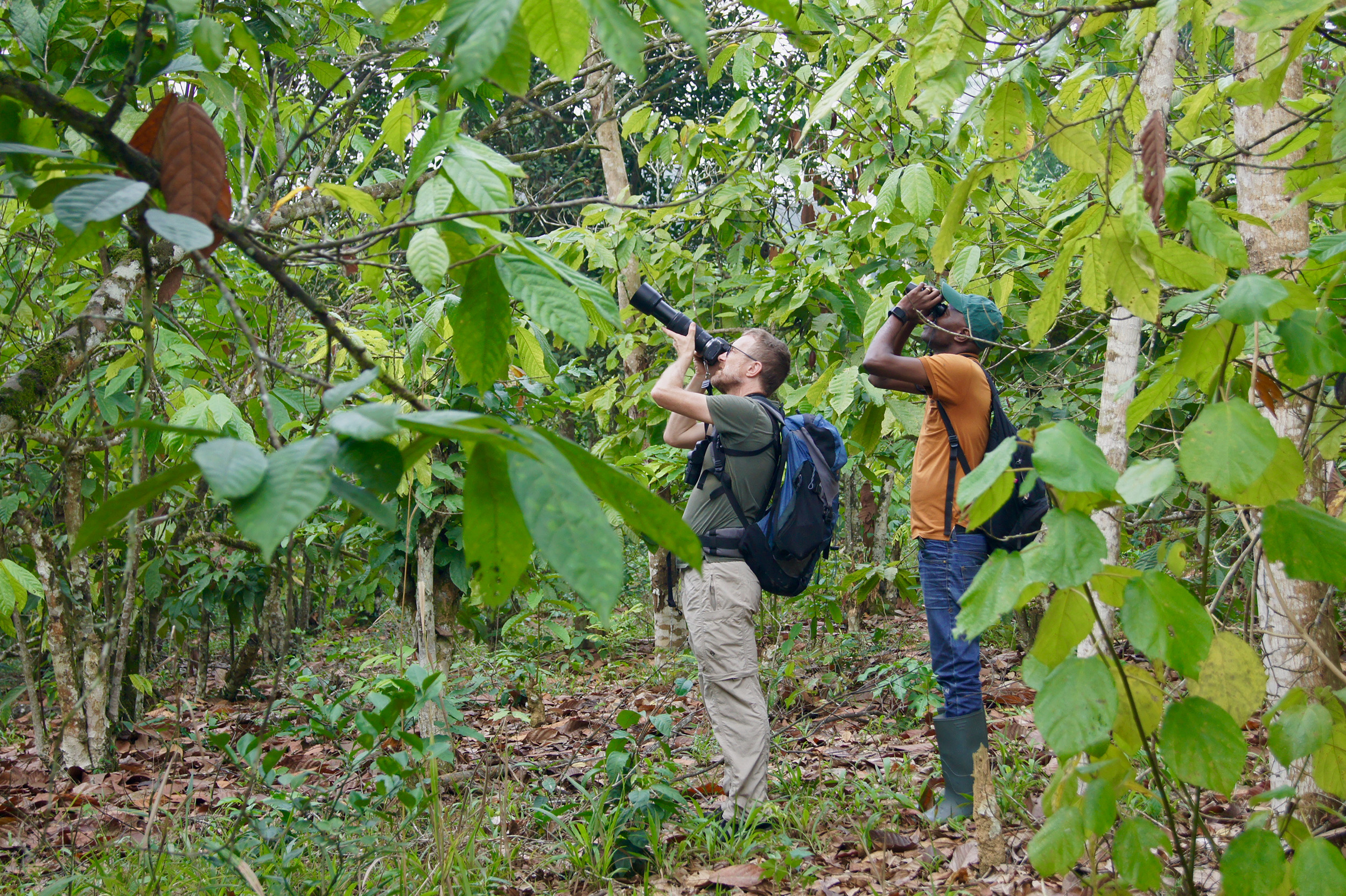
Cocoa production in Ghana and Côte d’Ivoire, spanning over 7 million hectares, is a significant driver of biodiversity loss due to full-sun farming practices and deforestation, even within protected areas. Although sustainability efforts in the cocoa sector have mainly targeted climate change, biodiversity – vital for resilient ecosystems and human well-being – has received far less attention. This three-year project, led by the University of Queensland, seeks to address this gap by evaluating and enhancing biodiversity in cocoa landscapes. This initiative builds on a previous project by ETH Zurich, funded by the Lindt Cocoa Foundation, which developed machine-learning models to map shade-tree cover and carbon stocks on cocoa farms. More information on the previous project here.
Main objectives
The overall objective of the project is to enhance biodiversity understanding and guide conservation efforts in cocoa production systems to ensure ecosystem health and the well-being of local communities.
The main objectives include evaluating current biodiversity, identifying key landscape features that support biodiversity, and determining high-priority areas for implementing cocoa agroforestry to benefit bird diversity. Moreover, the project aims to establish a foundation for long-term biodiversity monitoring by identifying indicator species and testing cost-effective monitoring methods.
Impressions